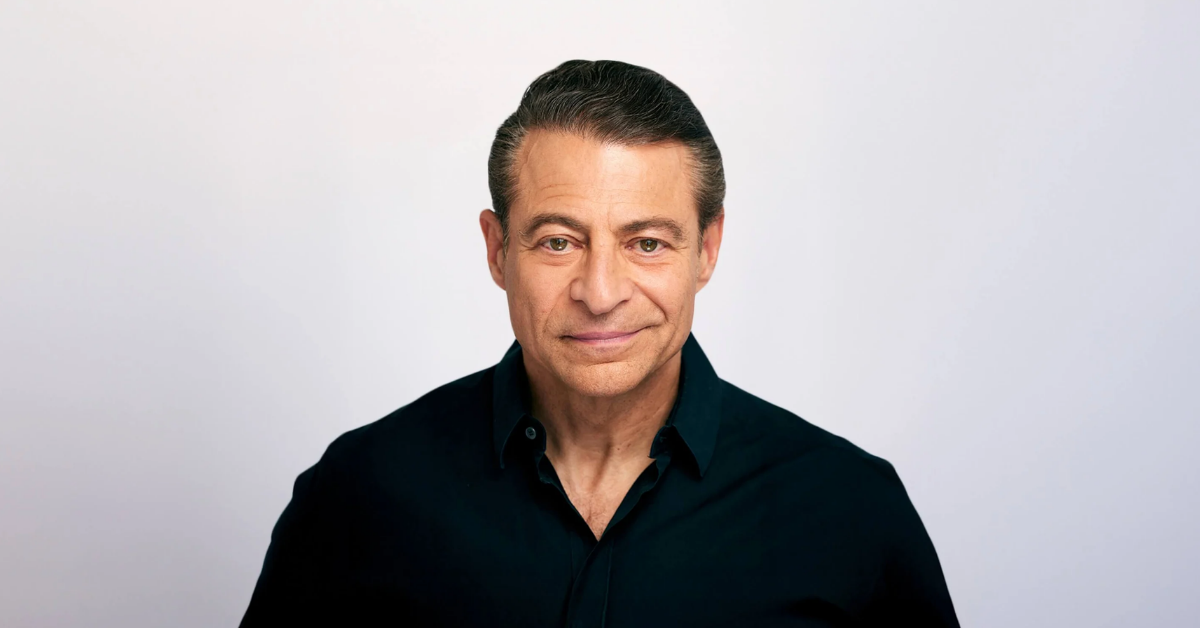
Peter Diamandis and his Moonshot Mates, among them Salim Ismail, Dave Blundin and Alexander Wissner-Gross, on technology, science and ambitious ideas about the future.
Dwarkesh Patel and Jerry Han found better training data gave a 12-fold compute-efficiency gain from 2019 to 2025 versus 3.7-fold for model recipes, in small models on easy benchmarks; a panel split on how long proprietary data stays valuable.
H100 rental prices rose 22% in a month to $3.28 per GPU-hour on Ornn's transaction index. Dave Blundin, whose fund backs Ornn, called it a reversal of chip depreciation; Emad Mostaque said better models make old Hoppers more useful.
Google DeepMind's AlphaGenome Atlas precomputes predicted molecular effects of every possible single-letter change in the human genome. A Moonshots panelist cautioned that what combinations of variants mean still needs outcome data.
In an exploratory analysis of 42 lung-fibrosis patients, AI-designed drug rentosertib made protein aging clocks read about three years younger by week four. Mortality clocks didn't significantly shift at 60 mg, and the effect plateaued by week 12.
Anthropic's most extreme AI scenario pairs 15% annual GDP growth by 2030 with 17.9% cognitive-worker unemployment and labor's share falling to 45%. On Moonshots, Blundin called it a lower bound; Emad Mostaque said it ignores collapsing demand.
DeepSeek says V4.1-Flash's KV cache needs a quarter of the HBM and an eighth of the SSD cache of its prior generation. Moonshots panelists argued that changes what AI data centers should buy; one estimated HBM is 40% of US buildout spending.
Sam Altman called OpenAI's claimed Navier–Stokes result the strongest evidence yet for pacing AI; on Moonshots, Peter Diamandis urged labs to publish measurable alignment plans, while other panelists disputed that remedy.
Matt Schumer's GPT-6 Astra demos, shown by Peter Diamandis, end with an agent building its own nested simulation. Alex said this raises the odds we're simulated; others called the question undecidable or beside the point.
Emad Mostaque called for AI tokens for everybody and 100 million government-underwritten robots owned by the people. Alex, who predicts "universal basic tokens," said Americans should own robots individually, not through a centralized state.
Dave Blundin of Link Ventures argues workers should aim to manage agent swarms, not one copilot. Emad Mostaque calls current job gains "the turkey before Thanksgiving"; Alexander Wissner-Gross says every profession is "cooked," in sequence.
Tesla opened an interest form for businesses wanting to buy Cybercab fleets for its Robotaxi Network, with no prices, delivery dates or revenue-sharing terms. Moonshots panelists, including Peter Diamandis, cast it as a path to owning machines.
Nvidia's Jensen Huang declared AGI achieved on September 6 as he announced more GPU capacity, and the Moonshots panel split on what the label means. OpenAI's figure of 3.1 agent research days per human day measures runtime, not finished work.
May we use a browser ID to count visits, article reading, return visits and how readers found us? The statistics stay on our server. We also count daily page totals without analytics cookies or visitor IDs.