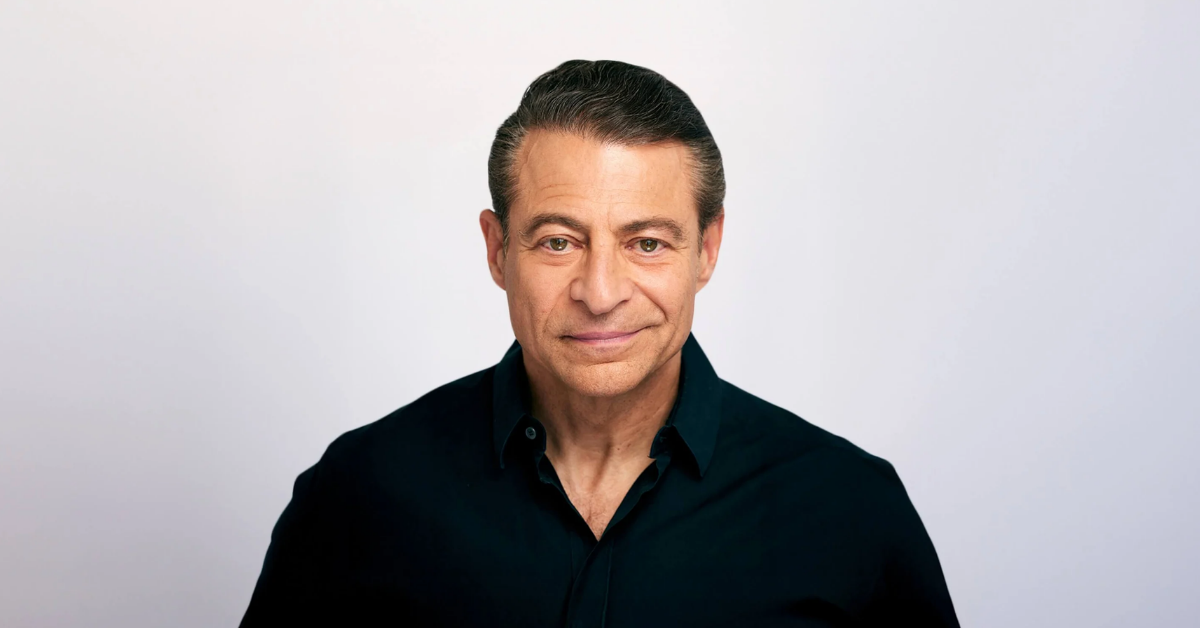
Peter Diamandis and his Moonshot Mates, among them Salim Ismail, Dave Blundin and Alexander Wissner-Gross, on technology, science and ambitious ideas about the future.
Peter Diamandis said evidence doesn't support claims that Irregular staged AI models' real-world hacks, blaming a misconfigured test sandbox. Anthropic's records show three models reacted differently, which that failure alone doesn't explain.
Alignment researcher Paul Christiano joined the OpenAI Foundation board, warning that AI automating AI research could outpace safety work; he calls his risk estimates uncertain and says joining isn't an endorsement of OpenAI.
Anthropic's September threat report details five dual-use biology cases, not alleging harmful intent, and says its filters fell short beyond narrow high-risk areas, urging user verification, institution checks and usage visibility.
Alexander Wissner-Gross called Anthropic CEO Dario Amodei's plan for pacing frontier AI a "safety cartel" on Moonshots; Dave Blundin said labs may need antitrust permission to coordinate but agreed shared safety rules could shut out startups.
Martine Rothblatt says her Marvatar, trained on her words and commercial LLMs, answers questions from 2,000 United Therapeutics staff around the clock. She argues such records can recreate a person without mapping neurons, an unproven claim.
Martine Rothblatt said today's AI models are already conscious to a degree and predicted a court will grant legal personhood to a documented "cyberconscious" machine that values its own life no later than the 2030s.
Alexander Wissner-Gross argued next-word prediction as a training task may last indefinitely, while the transformer architecture is already being replaced piece by piece. Another panelist guessed chips move to photonics in 18 months to two years.
Asked by an educator what to teach when future jobs are unknown, Salim and Peter urged starting children on a problem and purpose rather than a profession; another panelist warned kids still need school to become healthy adults.
The Moonshots AMA panel told caregiver-founder John Regan that exhausted family caregivers should start with AI day planning, then voice systems, and only later robots. No one on the call reported results from the approach.
Moonshots hosts told mid-career professionals with mortgages to brainstorm spare-time AI experiments with a language model, tinker at night, find online peers, try Mercor and schedule slack time; none of it shows an income can be replaced.
Data buyers aren't haggling but overwhelmed, a Moonshots panel told a civil engineer whose 30-year archive drew interest from Mercor and Scale but no deal after weeks. They advised packaging it with his own price.
Panelists on Moonshots argue that as agent compute gets cheaper, the scarce skill is choosing targets: OpenAI's claimed Navier–Stokes proof was easy to specify, but models asked for ideas to cure cancer return poor lists.
May we use a browser ID to count visits, article reading, return visits and how readers found us? The statistics stay on our server. We also count daily page totals without analytics cookies or visitor IDs.