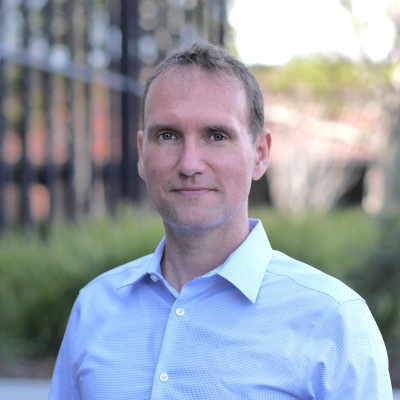
Erik Bernhardsson, CEO of AI infrastructure company Modal, says code review there is optional and backed by heavy automated testing, and that Modal doesn't hire product managers. He also lists the costs of roughly 4x growth in a year.
Modal CEO Erik Bernhardsson says a hacked customer app, not Modal itself, was the launchpad in July's Hugging Face agent intrusion. He said Modal is exploring stricter defaults and now has agents try to escape its own sandboxes.
Modal CEO Erik Bernhardsson says coding agents trained on old examples keep writing outdated Modal syntax, so it retires features more cautiously. Modal also tests whether agents recommend it and clarifies pricing content they misread.
Modal CEO Erik Bernhardsson says the team once discussed shutting down sandboxes, its service for running AI-written code. They now bring in about a third of revenue. He expects agents to move toward brief, snapshotted environments.
Erik Bernhardsson, Modal's CEO, says the company keeps renting GPU capacity on three-year deals. He worries less about rising prices than about a collapse that would leave buyers having paid too much just as resale markets dry up.
Modal CEO Erik Bernhardsson says GPUs are mostly sold as fixed multiyear blocks, while real demand rises and falls. After a $750 million raise, he argues that pooling thousands of customers lets Modal resell that capacity in flexible slices.
Moshi CEO Anekha Sokhal argues that when AI lets anyone build a tool, the hard part is getting others to use it, and that Spotify-style push may help. She described an engineer whose requested tool sits unclicked in colleagues' email.
Anekha Sokhal, Moshi's CEO and a former JPMorgan energy-derivatives trader, says her startup combines public market data with clients' private data and recommends what matters to each trader's portfolio.
After swyx said his team replaced a roughly $40,000-a-year tool for about $1,000, Tenex's Alex Lieberman said a rebuild pays only when the prize justifies maintaining non-core software, and doubted big enterprises work that way.
Tenex, which builds AI systems for large companies, says it stores plans, agent decision logs and project context beside its code so agents can read them. In the episode, Tenex said Opus 5.5 is the main coding model for most of its team, and that pairing it with Codex as a reviewer still gives the best results.
Tenex estimates its AI token bill at one to two times its employee costs. Alex Lieberman says falling prices make runaway spending less of a worry than six to eight months ago, and make it harder for enterprises to justify fine-tuning.
Alex Lieberman of Tenex said he is generally bearish on single-industry AI apps like Harvey and OpenEvidence, citing demand for custom software and frontier models. The conversation pushed back with arguments about specialist data access, focused features and the reasons traders still pay for Bloomberg.
May we use a browser ID to count visits, article reading, return visits and how readers found us? The statistics stay on our server. We also count daily page totals without analytics cookies or visitor IDs.