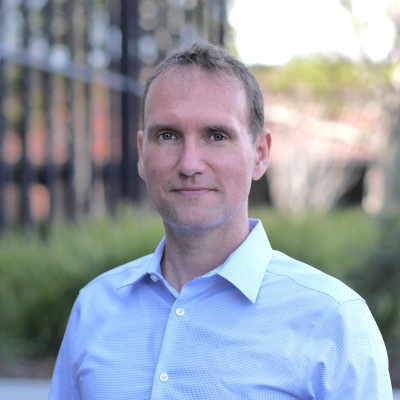
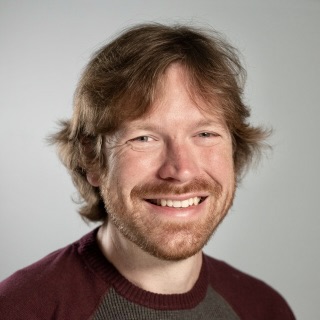
Liam Fedus of Periodic Labs says rewarding AI for finding a superconductor is too slow and noisy. The startup instead rewards it for identifying what X-ray data show a lab actually made, though ambiguity remains.
MIT PhD student Alex Zhang said AI generates nearly all recent GPU Mode leaderboard solutions, yet one expert's AI-steered kernel was essentially the only top-10 entry stable end to end. He argues experts remain strong verifiers.
MIT researcher Alex Zhang argues that TypeSafe's Jev, which returns fast typed decisions instead of prose, matters as a test of new language-model designs, not as a mere classifier. He says the open question is how it was trained.
Alex Zhang, an MIT PhD student, described Prime Agent, built with Prime Intellect: the agent acts only through Python and keeps its history on disk. He also cited outside RLM work, including Harvey's legal agents and Laude Institute's Headlong.
MIT's Alex Zhang says Claude Code, Codex and Pi share nearly all their design. He argues code-based recursive harnesses could help models generalize, citing his own early experiments on one open model as support.
MIT PhD student Alex Zhang guesses that about 95% of an agent swarm like OpenAI's Navier–Stokes run burns tokens on dead ends. He still calls OpenAI's approach right and says getting a swarm to converge is the hard part.
OpenAI's Ari Weinstein says computer-use agents can now operate software made for people, citing a two-hour meal order an agent did in 15 minutes. He adds that builders must earn trust through reliability, consent before payments and site limits.
At DevDay, OpenAI API product lead Nikunj Handa said GPT-6 lets agents keep reasoning while tools run and take new instructions mid-task. He also described longer cache guarantees, one still in preview, and open questions about the platform.
OpenAI's Nikunj Handa says the Decisions API, inspired by TypeSafe's Jev, began about a week before DevDay and runs on existing Luna weights, not a new model. He agreed confidence calibration may need future model work.
Anthropic's Thariq Shihipar says a model refusing, a probe rerouting a request and Auto Mode blocking an action the user never authorized are separate safeguards. He says a failure in any one layer can let an agent escape.
Anthropic's Thariq Shihipar argues that stronger coding agents make prompting more important. He says rich context up front, effort matched to the task and review of the agent's decisions cut rework. His effort settings are a rough guide.
Anthropic's Thariq Shihipar says Claude work is shifting from one local session to a cloud agent that sends tasks to local or remote machines and shows progress in shared artifacts. Local access remains a plan, and Projects is in limited release.
May we use a browser ID to count visits, article reading, return visits and how readers found us? The statistics stay on our server. We also count daily page totals without analytics cookies or visitor IDs.