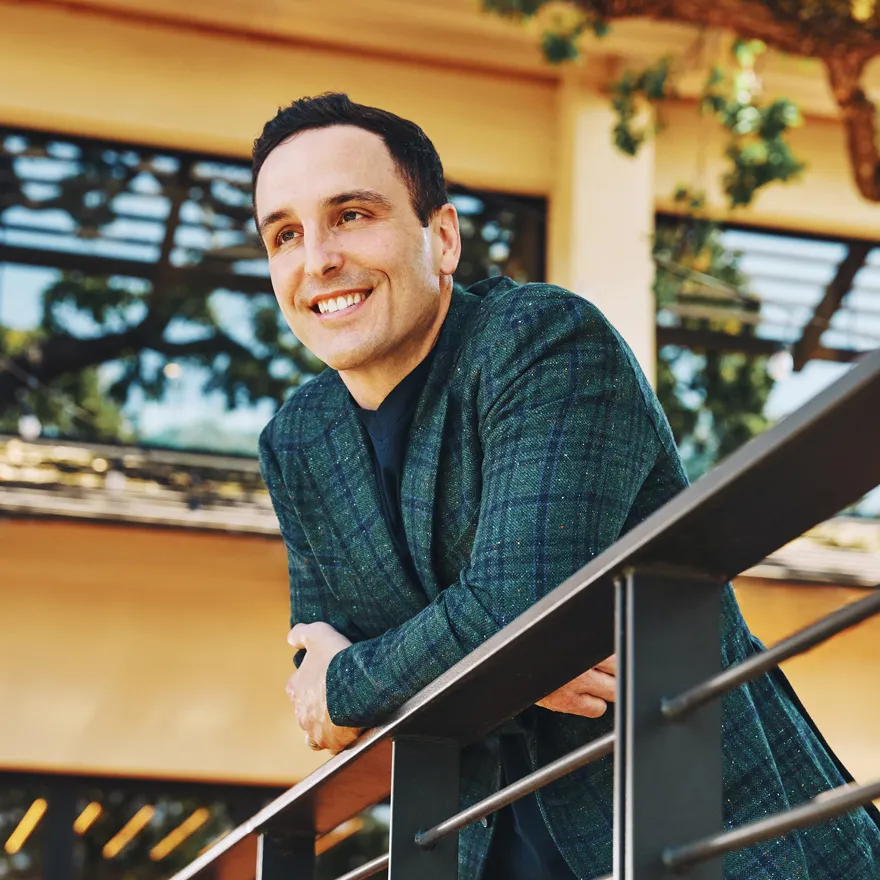
Josh Gao, CEO of robot-data supplier Mecka AI, says labs train on about a million hours of human data, tens of thousands of gripper hours and a few teleop hours. He argues scaling that alone won't yield a robot that learns any task by watching.
Mecka CEO Josh Gao says robotics is still orders of magnitude short of Tesla's driving data. He expects constrained, goal-oriented jobs such as industrial cleaning to come first. He says homes are where the field must take the most care, and that data collected on site can close the reliability gap.
Mecka CEO Josh Gao described how his company makes robot training data, with camera caps, force-sensing gloves and checks against fraud. He said contributor pay matters less to its margin than verifiably high-quality data at scale.
Box's Aaron Levie says AI-generated code is often preferable, but AI-written board decks bother him because a deck still signals what its author knows and can execute, though he admits using AI for his own brainstorms and decisions.
Box CEO Aaron Levie says the company ranks employees by AI token use not to reward spending but to spot waste or workflows worth teaching others, and reports two-to-threefold gains in customer-facing features in parts of its stack.
Box CEO Aaron Levie says shifting access permissions, like a lawyer walled off from rival matters, complicate training company knowledge into model weights. He wants a rubric on what to bake in and expects answers to vary by domain.
Box CEO Aaron Levie says the big labs' revenue and open-weight token use can grow together, as agents split work so cheaper models handle far more tokens. He sees enterprise open-weight adoption as early, driven partly by hedging.
Box CEO Aaron Levie said companies holding customers' data must build an agent provably 10–20 points better than off-the-shelf ones at their workflows and also open their APIs to Claude, ChatGPT and other assistants, or lose.
Box CEO Aaron Levie argues AI spread fastest through coding because code is text and engineers fix their own tools, while jobs like sales lag. He is betting, admittedly with bias, that the money lies in bringing AI into other workflows.
Peregrine co-founders Nick Noone and Ben Rudolph call field engineers R&D, using their workarounds to decide what to build. They say falling costs now let them serve city agencies, but their $1m-a-year figure is ambiguous.
Peregrine's Ben Rudolph said agents running for hours write about 90% of the Python notebooks that integrate agencies' public-safety records, under deployment-team oversight — part of the preparation the podcast host put at 95% of the work.
Peregrine founders Nick Noone and Ben Rudolph say their company inverts public-safety software's data-collection model by joining records agencies already hold, which they own, and leaves facial recognition to customers and law.
May we use a browser ID to count visits, article reading, return visits and how readers found us? The statistics stay on our server. We also count daily page totals without analytics cookies or visitor IDs.