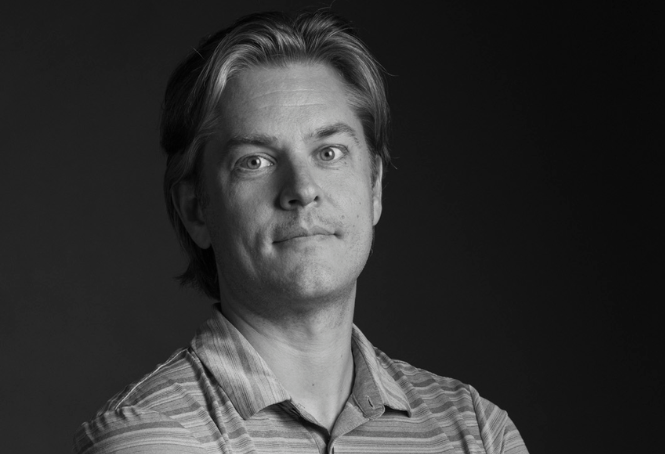
Keerthana Gopalakrishnan of Google DeepMind says robot models are at a GPT-2 stage. In her view, a GPT-3 moment needs few-shot teaching to work across many tasks and one brain to run reliably on a new robot body, a test language models never faced.
Keerthana Gopalakrishnan, who leads Gemini Robotics research at Google DeepMind, explained how a reasoning model open to developers directs an action model limited to testers, and where she says failures arise.
Joel Borgen co-wrote his novel The Receipt Horizon with Claude and ChatGPT Pro. He says he planned the story, cut AI over-explanation and trimmed about 14%, and that good AI-assisted work still takes heavy human judgment, for now.
Steve Hou of Silicon Data said big clouds charge at least two to three times neocloud GPU rates for bundled services. He guessed a recent rise in its token index reflects which models people use, not price hikes.
Gamow Labs founder Daniel McKinnon says startups like his can't compete on building models. His team combines frontier models, builds tools and tests the whole system, and he says that layer is thinning as models improve.
Daniel McKinnon, whose son died of a rare lung disease, built an AI pipeline that rediscovered a deletion a lab had missed and a specialist later found. His four-month-old Gamow Labs now uses AI agents to reanalyse unresolved genomes.
Gladstone AI's Edouard Harris says friendly Chinese rhetoric must be weighed against Beijing's track record. A Chinese lab or regulator slowing down after its own AI incident would be a much harder signal to fake.
Edouard Harris says that after a serious AI incident, the US could today realistically ask China only to switch off large, visible computing clusters. He argues cheaper, pre-vetted verification is needed first.
Author Garrison Lovely argues much of the American left dismissed AI as hype because of trusted skeptics, past tech fads, fear and dislike of AI's champions. He urges it to treat labor replacement as real and organize against it.
Author Garrison Lovely says opposition to labor-replacing AI should copy the climate movement's big-tent coalition. He argues a data-center moratorium alone would not slow AI much without regulating developers and chip makers.
Author Garrison Lovely argues that building AI to replace all human labor is a choice that can be stopped. He says medical benefits can be pursued directly through drug prizes and Warp Speed-style programs.
Author Garrison Lovely argues that an AI that reliably obeys would speed the race to replace human labor, so he favors governance and treaty verification. The discussion called the problem under-theorized but questioned demanding a blueprint.
May we use a browser ID to count visits, article reading, return visits and how readers found us? The statistics stay on our server. We also count daily page totals without analytics cookies or visitor IDs.